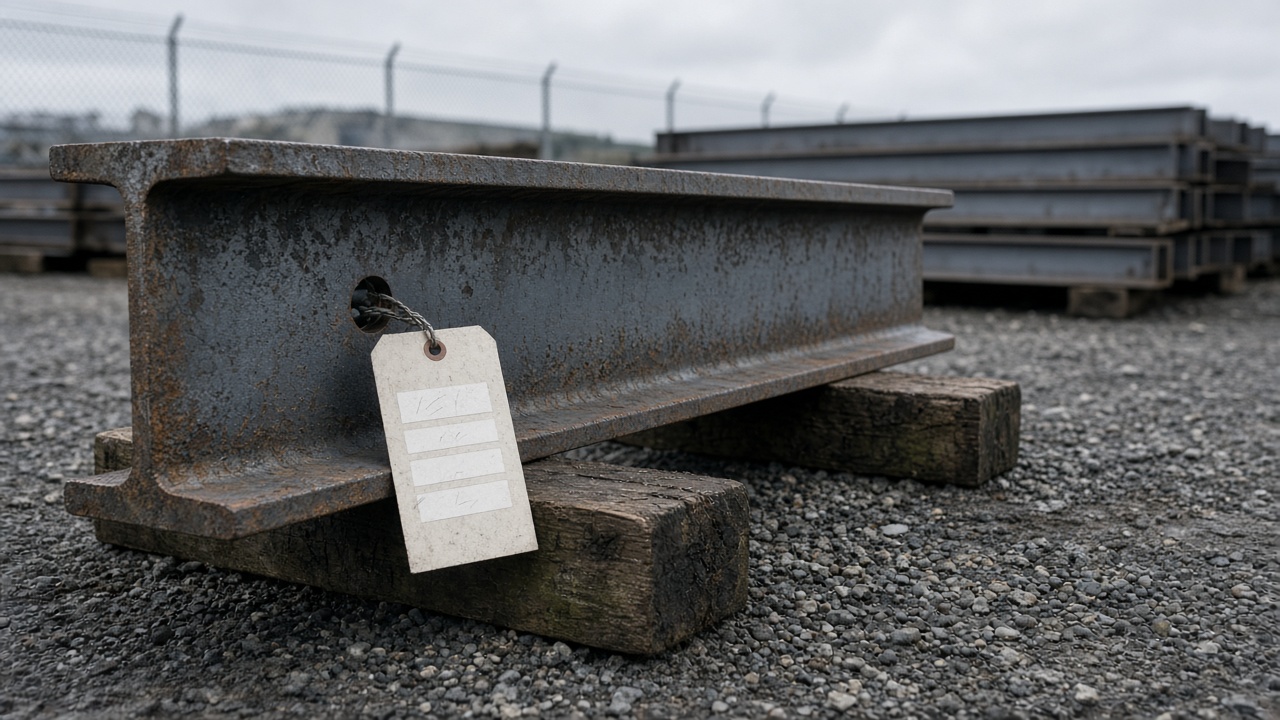
A fund's technical adviser asks a plain question about a building barely out of its defects period: what is the rainscreen made of, and which embodied-carbon figure belongs to the panels that were actually fitted? The sustainability consultant who ran the assessment has moved firms. The contractor's account is closed. What exists is the pack — an embodied-carbon summary, a materials appendix, a circularity paragraph written for planning — and four hundred operation-and-maintenance files nobody has opened since the second winter. All of it was delivered on time. None of it answers the question that was asked.
Facilities received that pack as a transmittal, not as something anyone expected them to query. The questions that arrive afterwards are narrower and more awkward than the pack: what is this unit made of, which carbon figure describes the thing on the roof rather than the thing in the specification, and can it come out again without a skip.
An asset passport holds the answers to those three on the identities the asset information model already uses, citing the issued set the building was left on. Not a second cupboard labelled ESG.
Where to start
Work backwards from the queries. A later owner, a funder, a replacement contractor and eventually a strip-out team each ask something specific. Keep the fields those questions need, bind every one of them to an asset tag and to the issued container that authorised what got built, and cut the paragraphs that cannot be queried from a single instance.
Two temptations are worth naming. The first is waiting for somebody to stand up a passport platform, which usually happens after the suppliers have stopped answering the phone. The second is adding a carbon cell because the authoring model happened to carry a parameter. ISO 19650 already separates project information from asset information; it does not write the materials, carbon and circularity fields for you, and no schema you buy will survive its first substitution.
A record, not a brochure
A brochure answers whether the project talked about sustainability. A passport answers a different question: starting from this tag, what is installed, what carbon evidence belongs to it, and how do we get it out? Producing volume is ordinary — most jobs are good at it. Binding those pages to the object that will still be in the building in twenty years is the part that gets skipped, largely because delivery is asked for a pack and the later owner asks for a query, and nobody is in the room for both conversations.
So the passport is best thought of as a slice of the AIM rather than a fifth information model: the same tag, the same location, the same as-installed product, plus the materials, carbon and recovery facts somebody will be asked to produce. Facts that live only in a design report leave with the design team. Facts that live only in a planning statement describe an intention. On the row an operator will query, they are a record.
Two identities is a fail. A carbon figure for "AHU typical, level two" while the casing says AHU-03 is the brochure with a new filename. A materials list that still names the specified cladding after a substitution is a hope. A circularity claim that cannot name the fixing is a slogan.
Materials
Materials means the identity of what is in the building, not a schedule of what was hoped for at tender.
For each tagged, maintainable or recoverable item — plant, façade cassette, doorset, raised floor, ceiling raft, a length of pipe somebody will one day cut out — the passport needs, as fields:
- The tag operations will search, matching the nameplate or the mark on the object.
- Location a stranger can walk to: building, floor, room or elevation, and the system or elevation the thing sits in.
- Manufacturer, product code or model, and the serial if the thing has one — as installed, not as specified.
- The principal constituents a later owner will be asked about: the metal, the timber, the mineral, the insulation, the finish, with a quantity and a unit.
- Hazardous or restricted content where it is already known. Asbestos is the historical lesson; refrigerants, treated timber, coatings and composite cores are the current ones. A blank here is a finding rather than a pass.
- The current document identity for the evidence — data sheet, declaration, certificate — with title, revision and date, pointed at this instance.
Cut the authoring-tool family name. Cut "typical". Cut the second manufacturer column that still says the specified make. Cut the materials appendix that lists tonnes for the whole job and cannot name the cassette on grid D.
Quantity without location is a procurement leftover, and location without constituents gives you a register that can find the thing but not say what it is made of. A photograph of a product label is evidence, not a field. If the product code lives only in a JPEG, the later query will not find it.
The characteristic failure is substitution. Plant, cladding and finishes change after the carbon model is frozen, sometimes in week forty, sometimes on a Friday afternoon when a lead time collapses. The passport records what was placed. Where the issued set authorised one product and the materials row still describes another, what you are holding is a design-stage hope that survived practical completion.
Carbon
Carbon on a passport is evidence bound to an installed product, not a building-wide headline for a board pack.
Where a figure genuinely exists, keep:
- the as-installed product the figure describes
- the declared unit — one unit, one square metre, one kilogram — so the number can be reused
- the life-cycle stages the figure covers, in ordinary language: product stage, transport to site, installation, and anything beyond that somebody actually calculated
- the identity of the environmental product declaration or the calculation note: title, publisher or programme operator, date, revision
- who accepted the figure for this instance, and against which issued product
Cut a lone "embodied carbon" cell with no unit and no scope. Cut a model output that still describes the specified product after the substitution. Cut a filename that says WLC_FINAL. A whole-life number for the building is a separate object and may well be required by a client or a funder, but you cannot recover, replace or defend a single cassette from a building total.
What this field saves is the archaeology that starts when a sustainability lead is asked for evidence and the only carbon file is a design-stage model nobody can join to the register. It is the same twelve-month hunt as a missing warranty start date, conducted by someone who was not there. The cheap moment is while the supplier can still confirm which product went in and which declaration covers it. The expensive moment is after the account is closed and the person who signed the substitution has changed employer.
Buyers and funds already ask for embodied-carbon evidence, and the information test does not change with whatever comes next: can you produce, from the tag, the figure that belongs to the installed thing, and the issued container that proves the thing is what was built? A carbon number that cannot cite the issued product is a hope. One that cites a superseded specification is worse — it is a hazard wearing a decimal.
Circularity
Circularity is how the thing comes out, and what it is still good for — not a paragraph declaring that the building was designed for disassembly.
Keep it as fields a strip-out contractor could use without a guided tour:
- whether the object is intended to be reused, remanufactured, recycled, or written off — and on what evidence
- how it is fixed: bolt, clip, mortar, adhesive, weld, a proprietary system. Connection type is the field that decides whether recovery is labour or destruction
- what must not be cut, broken or contaminated to get it out
- expected service life, and whether a residual life was ever estimated
- the access route, and any residual that makes recovery a permit job rather than a tidy
- who would still take it: manufacturer take-back, a known reclaimer, or the skip
Cut "circular by design". Cut the planning statement that cannot name a fixing. Cut a reuse percentage for the whole job with no instance underneath it.
Circularity fails where materials and carbon fail. The specified cassette was mechanically fixed and the installed one was bonded. The specified raised floor was a recoverable system and the substitution was a glued finish. Where the issued set recorded the change and the passport did not, the later salvage claim is fiction; where neither recorded it, the salvage claim is a guess and the demolition contractor will price it as one.
The health-and-safety file already asks a neighbouring question — residual hazard, significant services, access, the structural principle you must not cut through. Circularity does not replace that file. It asks the recovery question the file was never written to answer, and it needs the same tag and the same current sheet to be worth anything.
01 · Materials
02 · Carbon
03 · Circularity
The two joins that make it a record
ISO 19650 names two information models. The project information model is what delivery produces and uses. The asset information model is what the operator — and later the owner, fielding questions about materials, carbon and recovery — is supposed to query. The industry talks as though one becomes the other at practical completion. It does not; the conversion is its own job, and the passport is part of that job or it is a PDF in a crate.
The issued set is the authorised construction and as-installed information: title, revision, suitability, recipients, state. Delivery knows that sentence, or claims to. A passport has to cite it. The materials row cites the specification or product sheet issued for construction, plus the substitution that was issued when the product changed. The carbon row cites the same product rather than a design-stage alternative. The circularity row cites the detail that was actually built — the fixing, the interface — not the typical detail that lost the argument in week forty.
Miss the issued set and you cannot prove the passport describes this building; you have a number, a constituent list and a reuse claim floating free of the sheet the trailer was working from. Miss the AIM and you cannot find the passport in ten years; you have a sustainability folder that does not join to the tag on the casing. Either omission makes the other one theatre.
A federation labelled as-built is still a project model. A common data environment archive published to the client is still a delivery cupboard. A COBie sheet in a pack is not an AIM unless the rows answer the operator and somebody accepted them as the model. The same test applies to the sustainability PDF in that pack: can a stranger to the job start from the tag and reach the materials, the carbon evidence and the recovery method without a tour?
The appointing party holds the instrument for this. Organisational information requirements sit with the asset-owning organisation; asset information requirements say what the AIM must contain. If materials, carbon and circularity are going to be queried — by a funder, an occupier, a later works contractor, or the owner's own reporting — they belong in those requirements as refusable fields, not as a late appendix titled Sustainability. An AIR that says "circularity", "net zero" or "passport-ready" fails in exactly the way an AIR that only says "COBie" fails. Purpose, objects, fields, documents, out of scope, and a pass or fail somebody can actually run.
An hour with ten objects
Print this and give it to the document controller and whoever will own the sustainability evidence — facilities if they exist, the information manager if they do not. Ten objects that will still be in the building in ten years, mixing plant and fabric: an air-handling unit, a façade cassette, a doorset, a raised floor, a length of pipe. Nobody tidies the folder the night before.
For each object, produce the following from project custody rather than from memory:
- Tag, location, manufacturer and as-installed product, matching the mark on the object.
- Principal constituents, with a quantity and a unit.
- The current document identity for the product evidence — title, revision, date.
- A carbon figure naming that same product, with a unit, a scope in plain language, and the identity of the declaration or calculation note — or a written "none".
- How the object is fixed, and whether recovery is reuse, recycling or loss.
- The issued container those sentences are allowed to cite: title, revision, suitability. Where a substitution was authorised, that container, not the specified one.
A pass is boring. The six facts sit on the row, and the row cites one current issued identity. A fail looks like a filename, a building-wide carbon total, a specified product after a substitution, a circularity paragraph with no fixing, or two revisions that both look live. Resist the urge to average the ten objects into a percentage; that invents precision the hour has not earned.
What cannot be produced in that hour is not a filing gap — the passport was never made, and relabelling the sustainability ZIP will not cut it. "We have a whole-life carbon report and a materials schedule, and we will map them later" is a decision to take the lesson late, from a funder asking for evidence, or from a strip-out crew treating recoverable fabric as mixed waste because nobody wrote down the fixing.
Where the standards stop
ISO 19650, the Construction Design and Management Regulations, the Building Safety Act, NEC, FIDIC, JCT, COBie and the project's own asset information requirements each have owners, and each assumes a contemporaneous record of what was installed and which information was authorised for use. None of them accepts a late sustainability PDF as proof that a later owner can query a cassette. Equally, none of them currently writes a product-passport regime with a clause number and a start date, and pretending otherwise to win an argument at a design meeting tends to end badly. The sustainability agenda will keep asking for materials, carbon and recovery. Information management already knows how to hold instance records against an issued set and an AIM. Joining those two sentences is the work in front of us.
If you own buildings, the leverage is at appointment, not at handover. Put materials, carbon and circularity into the asset information requirements as named, refusable fields with a stated pass or fail. Name one person — usually the information manager, working from the sustainability lead's list — who accepts those rows against the issued containers, and give them the authority to reject a row that cites a superseded specification. Make substitutions carry a passport update as part of the authorisation, because that is the only moment the evidence is cheap. Hold a slice of the final account against acceptance of the passport rows, in the same way you would for commissioning records.
None of that is free. Chasing declarations from suppliers while the accounts are open is real hours for a real person, and it needs a budget line and a named owner rather than a line in a BEP. It is still less than a due-diligence exercise that reprices a building because nobody can evidence what the façade is made of. Before you sign the last certificate, ask for the six facts on ten objects, and treat what comes back in that hour as the thing you are actually buying.
Read next: From PIM to AIM: the transition nobody owns, The asset register: which fields actually matter to a facilities team, The day-one-operable building: what it takes.